Water Leak Detection in Auburn
Water leak detection in Auburn and surrounding areas. Insurance billing accepted. Call (508) 756-8800.
A water bill that jumps for no obvious reason, a warm spot on the slab, a musty smell behind a bathroom wall that won’t go away no matter how much you clean: these are the quiet signals of a leak that hasn’t announced itself yet. By the time water shows up as a stain on the ceiling or a soft spot in the flooring, it has often been moving through framing, slab, or soil for weeks. Water Leak Detection finds the source before it turns into a structural or mold problem, without tearing out walls or floors to go looking for it.
What Water Leak Detection actually involves
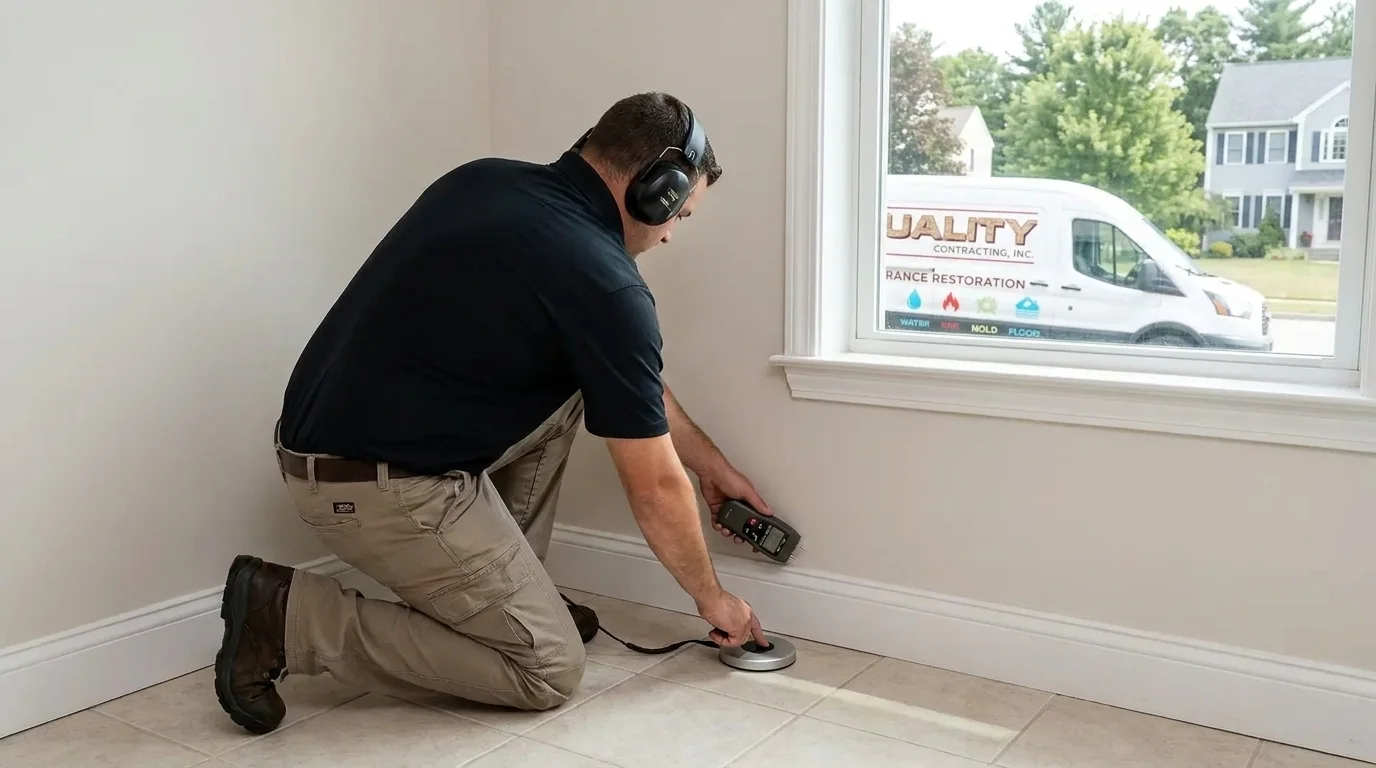
This is diagnostic work, not demolition. Using moisture meters, thermal imaging cameras, and acoustic listening equipment, a technician traces where water is actually moving instead of guessing based on where it surfaced. Thermal imaging picks up temperature differences in slab and wall surfaces that often correspond to a wet area long before it’s visible. Acoustic detection listens for the specific sound a pressurized line makes when water is escaping under a slab or behind tile. For a hidden water leak in a wall or a suspected slab leak, this combination usually narrows the source to a specific section of pipe or a specific wall cavity, rather than a vague “somewhere over here.” Most leak detection visits take one to a few hours depending on the size of the home and how many fixtures or lines need to be checked.
Our process
- Symptom review - we start with what you’ve noticed: a water bill spike, a sound of running water with no fixture on, a warm patch on the floor, or a damp smell in one room.
- Non-invasive scanning - thermal imaging and moisture meters sweep the suspect area to map where moisture is actually present, not just where it’s visible.
- Acoustic and pressure testing - for suspected slab or in-wall supply line leaks, acoustic equipment isolates the sound signature of the leak, and in some cases a pressure test on isolated lines confirms which run is losing pressure.
- Source confirmation - we pinpoint the leak to a specific location before any opening is made, so if drywall, flooring, or slab needs to come up, it’s a targeted cut, not an exploratory one.
- Written findings - you get a clear explanation of what was found, where, and what repair or further work (plumbing repair, drying, or reconstruction) it calls for.
What separates a good Water Leak Detection response from a bad one
The most common mistake is skipping the diagnostic step entirely and cutting open walls or slab based on where water is visible, which is frequently not where the leak originates, since water travels along framing, vapor barriers, and slab seams before it surfaces. A rushed job also skips the moisture mapping step that tells you how far the water has already spread, which matters if there’s a mold or structural conversation coming later with an adjuster. A good leak detection visit documents moisture readings and thermal images at the time of inspection, which becomes useful evidence if a claim is filed and an adjuster asks how the source and extent of the leak were determined. It also distinguishes clearly between “we found the leak” and “we fixed the leak,” since detection and plumbing repair are two different scopes of work even when they happen back to back.
What does Water Leak Detection cost?
Costs vary with how accessible the suspected leak is and what kind of equipment the job requires, from a straightforward moisture scan to a slab leak search requiring acoustic and pressure testing. Every property and situation is different, and QCI Restoration provides a written scope of the detection work before anything begins. Homeowners insurance often covers the cost of locating a leak when it’s tied to a covered water loss, though coverage for leak detection as a standalone diagnostic service varies by policy, so it’s worth checking your specific terms.
| Scenario | Typical range |
|---|---|
| Single fixture or appliance leak check | $150 - $350 |
| Whole-house moisture and leak survey | $300 - $600 |
| Water leak in wall, thermal and acoustic scan | $350 - $750 |
| Slab leak detection, acoustic and pressure testing | $500 - $1,200 |
| Leak detection combined with same-visit mold inspection | $600 - $1,500 |
Seasonal & regional considerations
Auburn’s housing stock includes a mix of older homes with original cast iron or galvanized supply lines and newer construction on slab, both of which carry different leak patterns. Older pipe tends to develop pinhole leaks from internal corrosion, often first noticed as a slow drop in water pressure or a damp spot that comes and goes. New England’s freeze-thaw winters also stress exposed or poorly insulated plumbing runs, so a leak that started as a hairline crack in colder months can widen and become a bigger hidden water leak by spring. Homes with finished basements are worth a periodic check, since water entering through a foundation crack or a slab leak can travel along the underside of flooring for a long time before it’s visible.
Service area
QCI Restoration provides Water Leak Detection throughout Auburn and surrounding Central Massachusetts communities, including homes on municipal water and private well systems alike.
If something about your water bill, your floor, or a smell in one room has been nagging at you, don’t wait for it to show up as a stain. Call (508) 756-8800 to schedule a leak detection visit and get a clear answer on what’s actually happening behind your walls or under your slab.
Services We Handle
- Leak Detection
Frequently Asked Questions
Does homeowners insurance cover water leak detection?
How do you find a leak without tearing open my walls or floor?
What are the signs of a slab leak?
How long does a leak detection visit take?
What happens after the leak is located?
Can a hidden water leak in a wall cause mold if it's not found quickly?
Looking for the best water leak detection company in Auburn?
QCI Restoration provides water leak detection in Auburn, MA and the surrounding area. Customers rate us 4.5 out of 5 stars across 121 Google reviews. We answer calls 24/7 — call (508) 756-8800 for immediate help.
Need Water Leak Detection now?
We respond 24/7 across Auburn and surrounding MA cities.
Related Coverage
- Our Restoration Services
- Contact QCI Restoration
- Restoration Services in Bellingham
- Restoration Services in East Douglas
- Restoration Services in Fiskdale
- Restoration Services in Framingham
- Restoration Services in Franklin Town
- Restoration Services in Hopkinton
- Restoration Services in Hudson
- Restoration Services in Leominster
- Restoration Services in Marlborough
- Restoration Services in Maynard
- Restoration Services in Milford
- Restoration Services in Natick