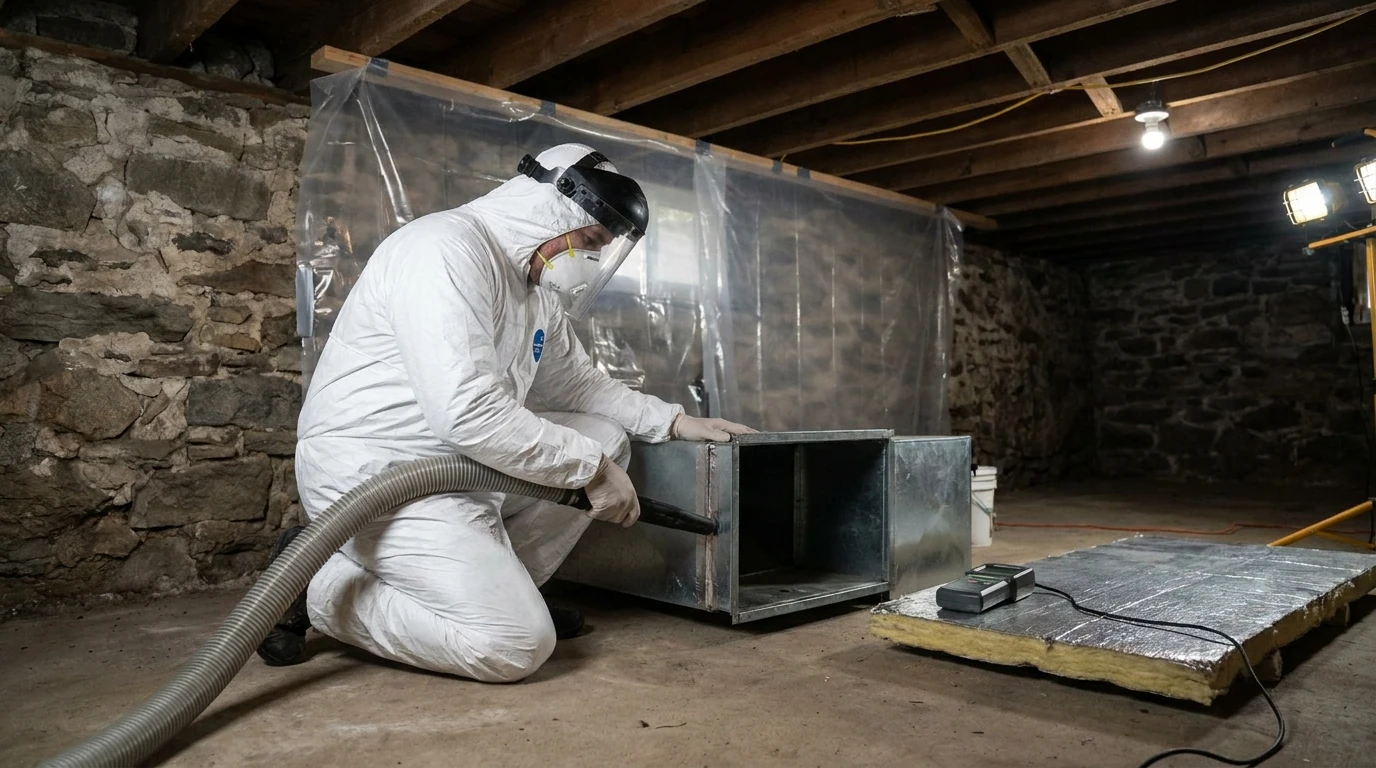
TL;DR: In Auburn, MA, HVAC mold remediation typically costs $450 to $7,500. A contained job limited to a section of metal ductwork or a coil runs $450 to $1,500. A full system affected by a water loss, flooded crawl space, or long-term humidity problem, including duct replacement and air handler work, runs $3,000 to $7,500. The real cost driver is whether the mold sits on a surface that can be cleaned or has colonized porous material that has to come out.
If a musty smell blows out of every supply register the second your furnace or AC kicks on, or a recent basement flood left standing water sitting under your air handler for a day or two, you’re probably not dealing with ordinary dust buildup. Mold can take hold inside ductwork within 24 to 48 hours of sustained moisture, according to the EPA, and once it’s established inside a duct run it keeps recirculating spores through every room on that zone until it’s actually removed, not just masked.
How Much Does HVAC Mold Remediation Cost in Auburn, MA?
Most Central Massachusetts homeowners pay between $450 and $7,500 for HVAC mold remediation, depending on scope. Here’s how that typically breaks down:
| Scenario | Typical Cost Range |
|---|---|
| Mold on interior walls of metal sheet ductwork (cleaning + antimicrobial) | $450 - $1,200 |
| Mold on the air handler coil or cabinet | $600 - $1,500 |
| Contaminated flexible duct replacement (per run, typical single-family) | $800 - $2,500 |
| Full system remediation after a water loss or flooded crawl space | $3,000 - $7,500 |
| Post-remediation clearance (air sample or ATP test) | $300 - $600 |
Every loss is different. QCI Restoration provides a written scope after inspecting the actual ductwork, not a phone-quote estimate, so you know what you’re paying for before work starts.
What Determines the Cost of HVAC Mold Remediation?
The biggest cost factor is whether the contaminated material is nonporous (can be cleaned) or porous (has to be removed). A few other things move the number:
- Accessibility. Ductwork running through a finished basement ceiling or a tight attic costs more to access than an open, unfinished basement, which is common in a lot of Auburn’s older Cape and ranch-style housing stock.
- Source of the moisture. A one-time event, like a burst supply line that sprayed into a floor register, is a more contained job than chronic condensation from an undersized or poorly sealed system.
- Run length and system size. A single-zone ranch costs less to remediate than a larger multi-zone home or a finished basement system with longer duct runs.
- Whether the air handler itself is affected. Coil and cabinet contamination usually means coordinating with an HVAC technician, since disassembly and reassembly of refrigerant lines is outside a remediation crew’s scope.
- Verification testing. Many homeowners request a post-remediation air sample or surface swab to confirm the work succeeded, which adds $300 to $600.
Can Mold in Ductwork Just Be Cleaned, or Does It Have to Be Replaced?
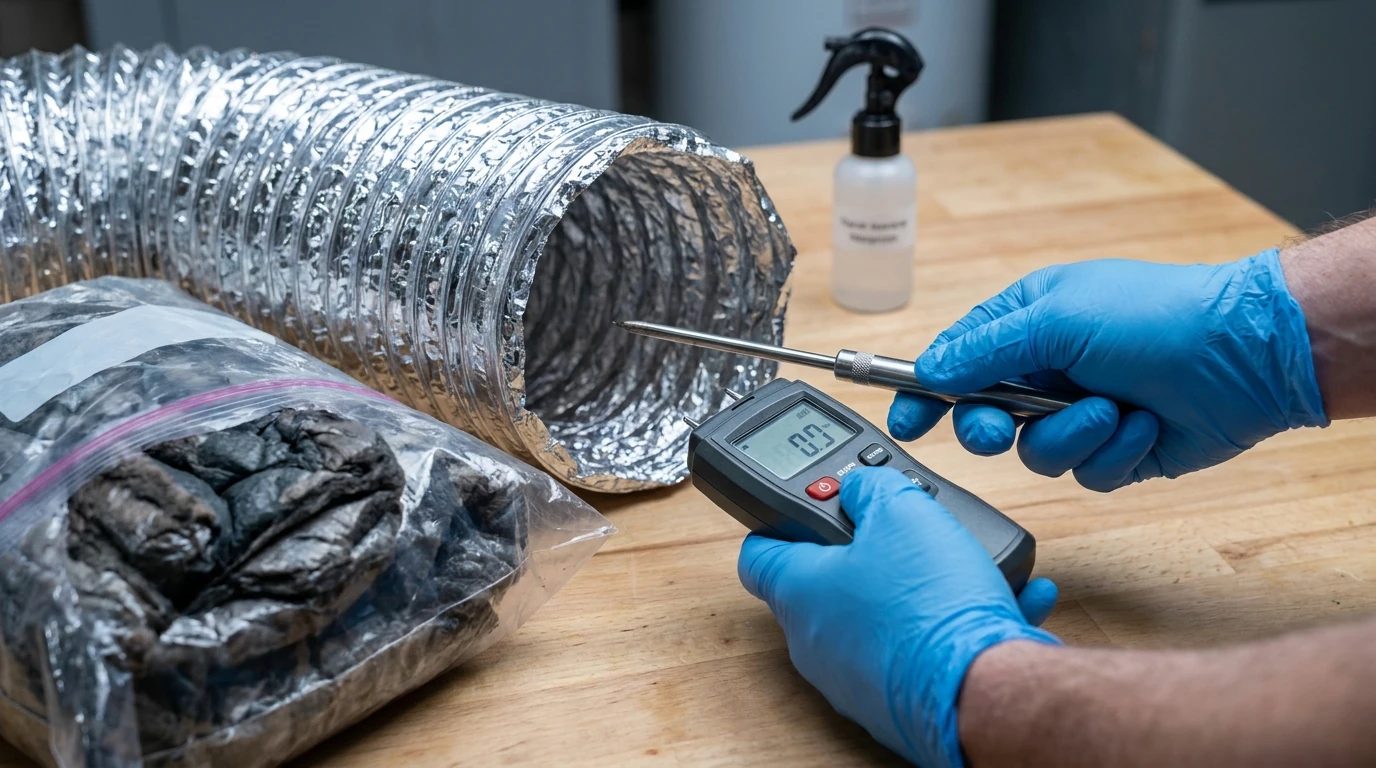
It depends entirely on the material. Mold growing on smooth metal duct interior can usually be HEPA-vacuumed and treated with an EPA-registered antimicrobial and stay resolved. Mold that has colonized flexible duct liner, duct board, or internal fiberglass insulation generally has to be cut out and replaced, because those porous materials can’t be fully decontaminated.
That’s also true of fiberglass duct wrap insulation that got wet during a flood or roof leak. If you’ve read how we test for mold elsewhere on this site, the same logic applies inside ductwork: a visual inspection plus a moisture reading at the suspect section tells a technician whether cleaning is realistic or whether that segment needs to come out. Standard duct cleaning alone does not remediate active mold growth; it’s a maintenance service, not a remediation process, which is why a musty smell often returns within weeks if a cleaning-only crew was sent in instead of a remediation crew.
Will Homeowners Insurance Cover Mold in Your HVAC System?
Homeowners insurance usually covers HVAC mold remediation only when the mold followed a sudden, accidental covered loss, like a burst supply line or a failed water heater that flooded the mechanical room. It typically does not cover mold that developed from gradual condensation, high indoor humidity, or a maintenance issue with the system, since most policies treat that as a wear-and-tear exclusion. Many policies also cap mold coverage with a sublimit even when the underlying loss is covered, so check your declarations page for a mold endorsement amount.
Documentation matters either way. Photos of the original water event, moisture meter readings, and a dated inspection report give an adjuster something concrete to work from. QCI Restoration handles that paperwork as part of the job, not as an add-on, which matters because most homeowners insurance claims move faster with a documented scope attached from day one.
What Happens During HVAC Mold Remediation?
- Inspection. A technician checks suspect duct sections, the air handler cabinet, and nearby registers with a moisture meter and, where needed, an air sample or surface swab.
- System shutdown. The HVAC system gets powered down so the fan doesn’t keep spreading spores through the house while work is underway.
- Containment. Registers near the work area get sealed and, for larger jobs, a negative-air setup keeps spores from migrating into living space.
- Removal or cleaning. Porous duct sections and insulation get cut out and bagged; nonporous metal surfaces are HEPA-vacuumed and treated with antimicrobial per the ANSI/IICRC S520 mold remediation standard.
- HVAC coordination. If the coil, blower, or cabinet needs service, QCI Restoration coordinates directly with an HVAC technician so the mechanical repair and the remediation happen on the same timeline, not as two separate headaches for the homeowner.
- Odor treatment. A persistent musty smell sometimes needs a hydroxyl or thermal fogging pass after the physical contamination is gone.
- Clearance. A post-remediation check confirms the work is done before registers get unsealed and the system goes back into service.
If a musty smell or a recent flood has you wondering whether it’s your ductwork, that question is worth answering before you spend money on a standard duct cleaning that won’t fix it. This is exactly the kind of job where coordinating a mold inspection, the remediation itself, and the HVAC repair across separate companies wastes time and money. One Call Does It All: QCI Restoration’s crews handle the inspection, the remediation, the odor treatment, and the insurance documentation under one scope, so you’re not managing three different contractors for one duct system.
About QCI Restoration
QCI Restoration (Quality Contracting, Inc.) is headquartered in Auburn, MA and serves Central Massachusetts and Greater Worcester, including Shrewsbury, Westborough, and Southborough, with 24/7 emergency response. Their crews handle water and fire damage, mold remediation, air duct cleaning, odor removal, and full reconstruction, so a single company manages a loss from the first inspection through the final rebuild. Call QCI Restoration at (508) 756-8800 to schedule an HVAC mold inspection.